Understanding Holiday Cocktail Party Entertainment Flow
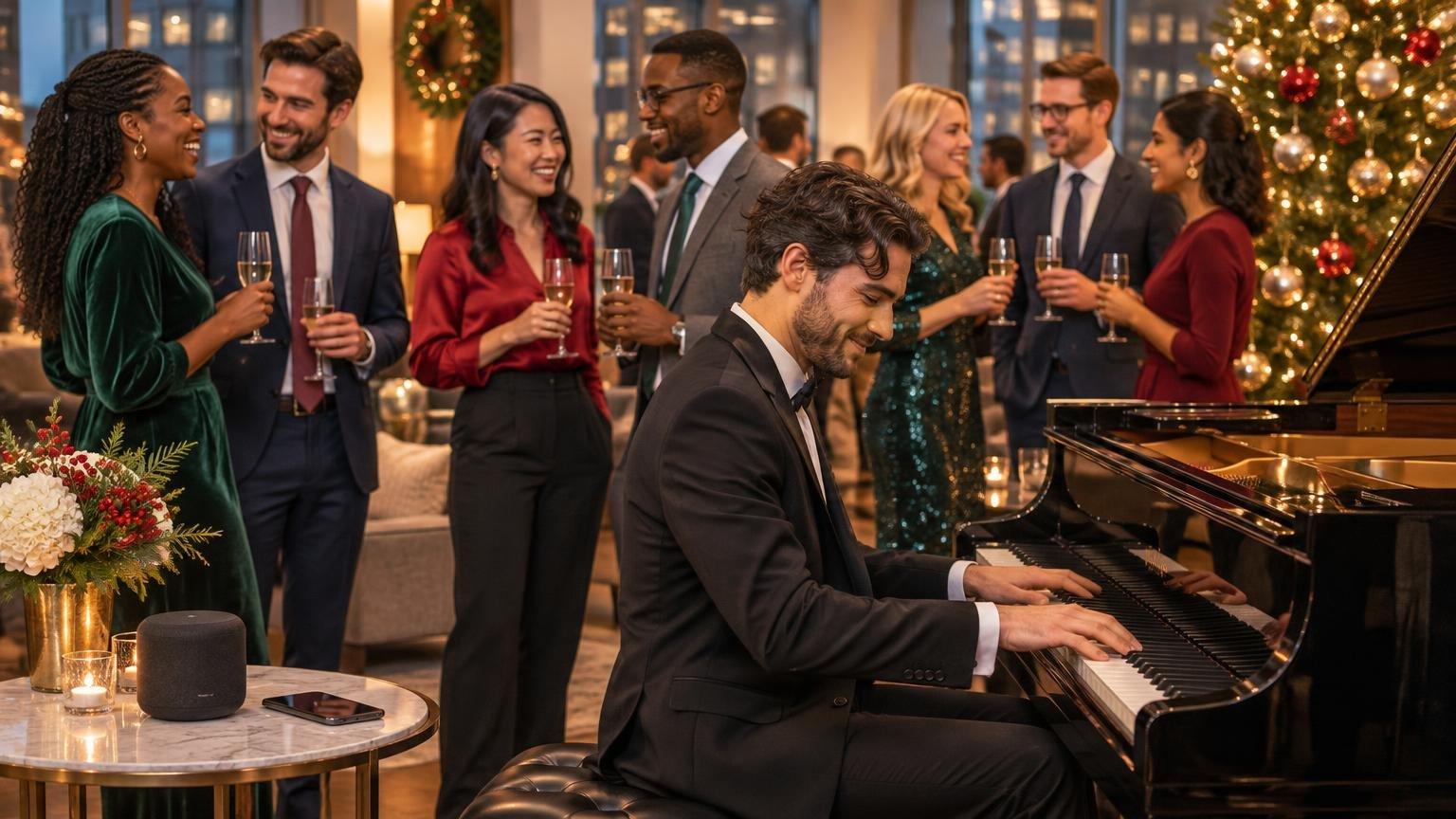
Holiday cocktail party entertainment works best when it follows the room instead of trying to run it. Guests arrive at different times, conversations start in small groups, and the biggest moments, like a toast or sing-along, need space to land.
We plan live music around those natural shifts. With piano, vocals, familiar songs, and requests, we can begin with an easy sense of occasion and gradually bring more energy into the room when your guests are ready for it.
Set the Tone Before the First Toast
The first few minutes of a holiday party set expectations. Your guests are greeting one another, picking up drinks, noticing the food, and getting comfortable in the space. Music should make that arrival feel polished without asking anyone to stop talking and watch a performance.
Live piano is especially well suited to this part of the evening. A jazz standard, a relaxed seasonal favorite, or a familiar pop melody can fill the room without taking it over. We can also add classical touches or light vocals when they fit the host's style and the setting.
Rather than treating the music as one fixed set, we shape it around the evening's pace. The sound can stay understated while guests settle in, become more recognizable as the room fills, then make room for the moments everyone is meant to share.
A strong flow often includes:
- Warm instrumental music for arrivals and first conversations
- Familiar songs as guests begin to gather
- A clean pause or softer background for remarks and toasts
- Requests, vocals, or sing-alongs later in the celebration
That flexibility keeps the music from feeling disconnected from the party. It becomes part of how the room feels, not a separate activity happening in the corner.
Build the Entertainment in Phases
The best holiday cocktail party entertainment is rarely one volume level, one tempo, or one style all night. We think of it in phases, because guest energy changes as people arrive, reconnect, eat, and relax.
During the arrival phase, a piano-led mix of jazz, instrumental favorites, and seasonal selections gives guests something pleasant to hear while leaving room for conversation. This is the time for songs people recognize without feeling pulled into a sing-along before they have even found the bar.
Once most of the group has arrived, the gathering phase can bring in more rhythm and familiar melodies. Upbeat classics, pop songs, and a few light vocal moments give the room a shared focal point. The party still feels like a cocktail gathering, but there is now a little more lift in the air.
Later, the music can become more interactive if that suits the group. Requests may lead naturally into a holiday favorite everyone knows. A few guests might want to sing. Others may be happy to listen, tap a foot, and enjoy the show from their conversation circle.
For company holiday parties, home celebrations, and brand-hosted gatherings, that gradual build matters. Guests should feel invited into the fun, never pushed toward it before the room is ready.
Match the Music to How Guests Gather
Song choices matter, but the shape of the gathering matters first. An open house with guests moving through several rooms has a different rhythm than an executive reception in a private dining room. A family holiday celebration may become lively quickly, while a brand event may need a more polished start.
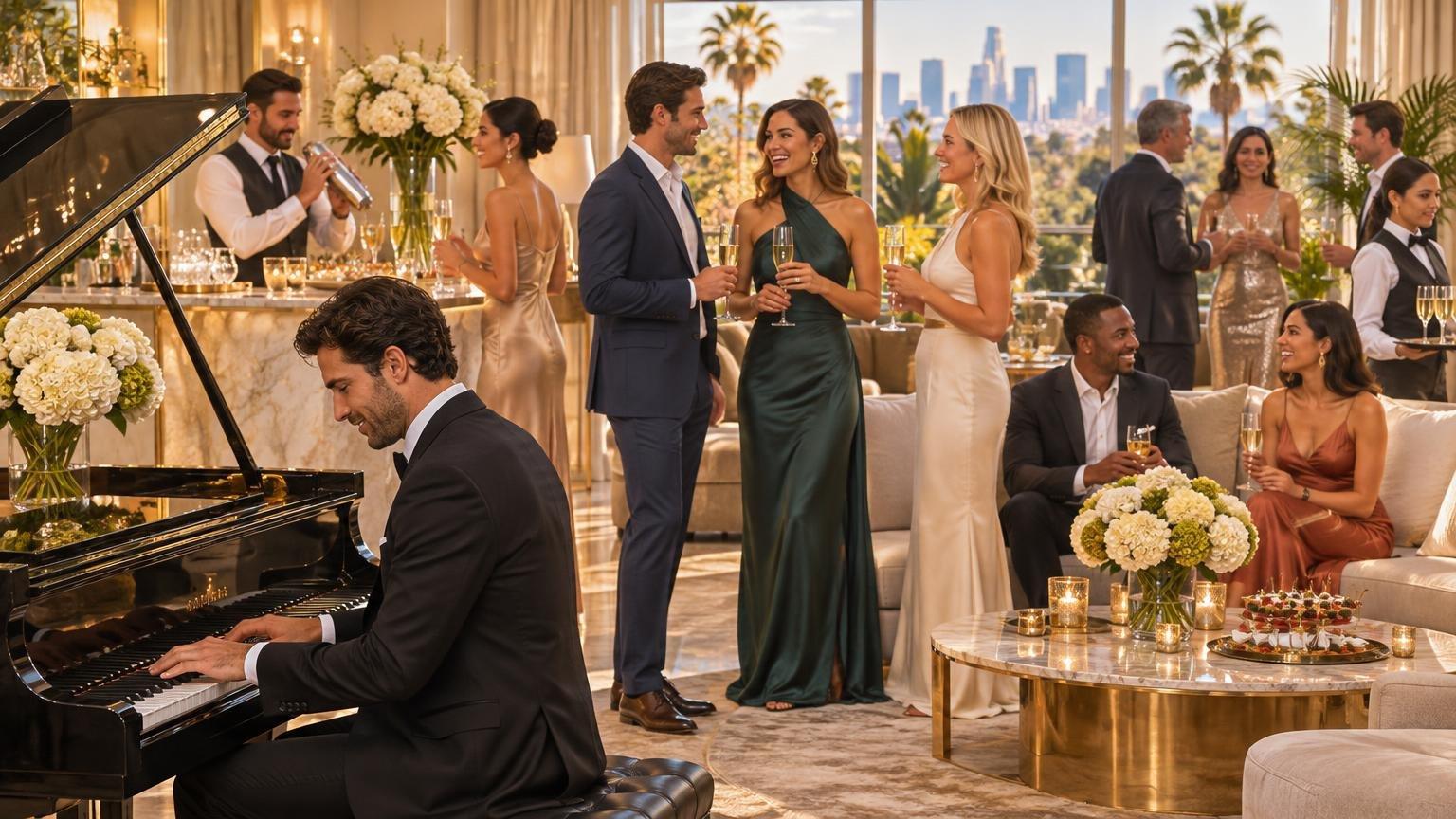
We look at how guests will move through the space. Piano placement should support the party, not create a traffic jam near the bar, food service, entryway, or main conversation areas. In a spread-out home, the music may need to carry gently across the room. In a lounge or dining space, a focused performance area can give guests a natural place to gather later in the night.
The host's desired atmosphere also guides the plan. Some groups want jazz, standards, and seasonal selections that stay elegant and easy. Others want a room full of people singing favorite pop songs by the end of the evening. Both approaches can begin with the same welcoming piano presence.
Our planning often comes back to a few simple questions:
- Will guests mostly mingle, dine, or move between rooms?
- Are there speeches, recognitions, or a holiday toast?
- Does the group enjoy requests and participation?
- Should the music remain in the background or become a focal point later?
Steven brings more than 25 years of experience across classical, jazz, pop, vocals, and custom arrangements. That range lets us respond to the people in the room instead of relying on a rigid set list.
Protect Conversation, Toasts, and Transitions
Good entertainment also knows when not to be the center of attention. A holiday cocktail party is built around conversation, so early music should feel present without making guests talk over it. As the party grows more animated, we can let the sound grow with it.
Before the event, we recommend identifying the moments that need a clear musical cue. A welcome message, company recognition, holiday toast, surprise arrival, gift exchange, or transition into dinner can all feel smoother when the performer knows what is coming.
Music can soften before a host begins speaking, pause cleanly for remarks, or provide an upbeat lead-in once the moment is finished. Those small adjustments keep the evening moving without making transitions feel awkward or overly formal.
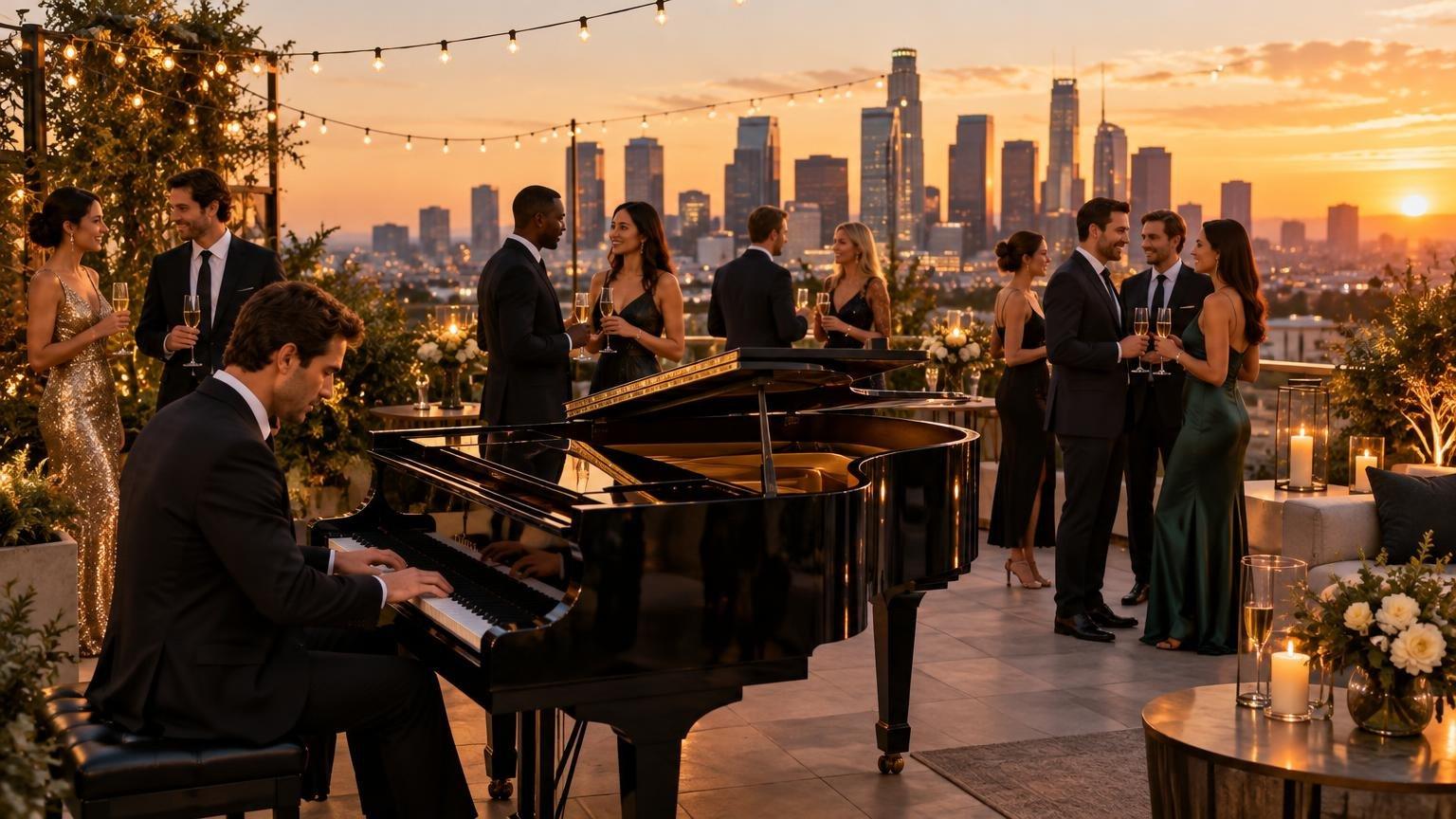
For Los Angeles gatherings, practical details matter, too. Indoor and outdoor setups, piano options, performance placement, sun exposure, and communication with the venue or planner can all affect the flow. When those details are considered early, the performance has room to feel natural once guests arrive.
Add Interaction When the Room Is Ready
Participation is often the part guests talk about afterward, but timing makes all the difference. A sing-along introduced too early can feel abrupt. After guests have had time to connect, though, a familiar chorus can turn into the moment that brings the whole room together.
Requests are an easy first step. Guests can call out holiday songs, classic pop favorites, or songs that mean something to the group. For parties that want more activity, piano karaoke and sing-along moments can give willing guests a chance to step into the spotlight while everyone else joins in from wherever they are standing.
The right point for participation is usually after guests have settled in, conversations are established, and the room has begun to share its attention. Starting with requests lets guests ease into the music, while saving sing-alongs or piano karaoke for later gives those moments a better chance to feel spontaneous rather than staged. When participation follows the party's natural energy, it can bring guests together without interrupting the relaxed flow that made the cocktail hour work in the first place.
Set the Right Tone From the First Arrival
For holiday cocktail party entertainment that follows your event's natural rhythm, check availability with Piano By Steven. We'll help shape live music around the guest experience you want to create, from early arrivals through the final toast. Bring us your event details, and we'll help make the evening feel easy, social, and full of life.