Elevate Your Museum Gala with Live Piano Magic
A museum gala in Los Angeles already feels special. You have art-filled halls, guests in polished looks, curated cocktails, and lighting that flatters every corner of the space. When you add live piano and vocals, the whole evening shifts from a nice event to something people talk about long after they leave.
The right pianist for a museum gala is not just background music. The music sets the emotional tone, shapes how guests move and mingle, and quietly supports your brand, your sponsors, and your fundraising goals. In this article, we will walk through how high-end piano entertainment fits into a museum setting, how to choose the right artist, and what details planners in LA should think about behind the scenes.
Why Live Piano Belongs in Every Museum Gala
Museums are already rich with sight and story. Live piano adds sound in a way that feels natural, not pushy. Instead of competing with the art, it creates an extra layer of mood that sits under the whole evening.
Here is how live piano fits the museum space:
- It supports themes, like modern art with stylish pop covers, or Old Masters with classical and jazz.
- It softens large open rooms, giving warmth to marble, glass, and concrete.
- It connects the visual story of the exhibits with the emotional story of your mission.
A skilled pianist and vocalist can also guide the flow of the night:
- Gentle ambience as guests arrive and find their footing.
- Brighter, more present songs for donor recognition and paddle raises.
- Light, steady music during dinner so conversation still feels easy.
When planners think about music as part of the strategy, not an afterthought, they often see:
- Guests staying longer and feeling more relaxed.
- Stronger emotional responses during speeches and films.
- A polished, high-end feeling that impresses VIPs and sponsors who attend many events.
Defining the Musical Vision for Your LA Museum Event
Before you book a pianist for a museum gala, it helps to be very clear on the vibe of the night. Not every museum event needs the same sound.
You might be planning:
- A black-tie fundraising gala with formal dinner.
- A contemporary art opening with a younger, creative crowd.
- A brand activation inside the museum for a product launch.
- An intimate patrons' dinner in a smaller gallery space.
Each one calls for a different musical approach. A black-tie gala may lean on elegant jazz standards, tasteful pop ballads on piano, and a few showpiece songs with vocals. A modern art opening could tilt toward current pop, indie, or film score style piano, maybe with more rhythmic energy.
We like to think of it as building a musical mood board. You can note:
- Genres you want to hear: jazz, pop, classical, film scores.
- Energy level across the night: soft start, bigger middle, calm close.
- Whether you want vocals, only instrumental, or a mix of both.
Timing and space in a museum matter a lot. Galleries can be echoey, and you may have speeches, silent auctions, live auctions, or guided tours. The music should support those moments, not fight them. A professional pianist will adjust volume and song choice so guests never feel like they have to shout, and the artwork still feels like the star of the room.
How to Choose the Right Pianist for a Museum Gala
Not every piano player is the right fit for a museum setting. Playing a loud restaurant or a casual party is different from playing next to priceless art and major donors.
Look for someone with specific experience in:
- Museum galas or similar cultural events.
- Corporate gatherings and nonprofit fundraisers.
- Luxury parties where brand image and guest comfort are top priorities.
Traits that usually make a strong fit include:
- Versatile repertoire across jazz, pop, and classics.
- The ability to read the room and shift styles on the spot.
- A polished, professional look that matches black-tie or cocktail dress codes.
- Comfort working within museum guidelines on volume, setup, and timing.
On your inquiry call, helpful questions include:
- Have you performed as a pianist for a museum gala or high-end cultural event?
- Are you familiar with major Los Angeles museum venues or similar spaces?
- How do you handle custom song requests or special moments in the program?
- What is your backup plan if there are technical issues or delays?
Their answers will tell you a lot about how they handle pressure, communicate with your planning team, and support your goals behind the scenes.
Logistics, Acoustics, and Seasonal Planning in LA
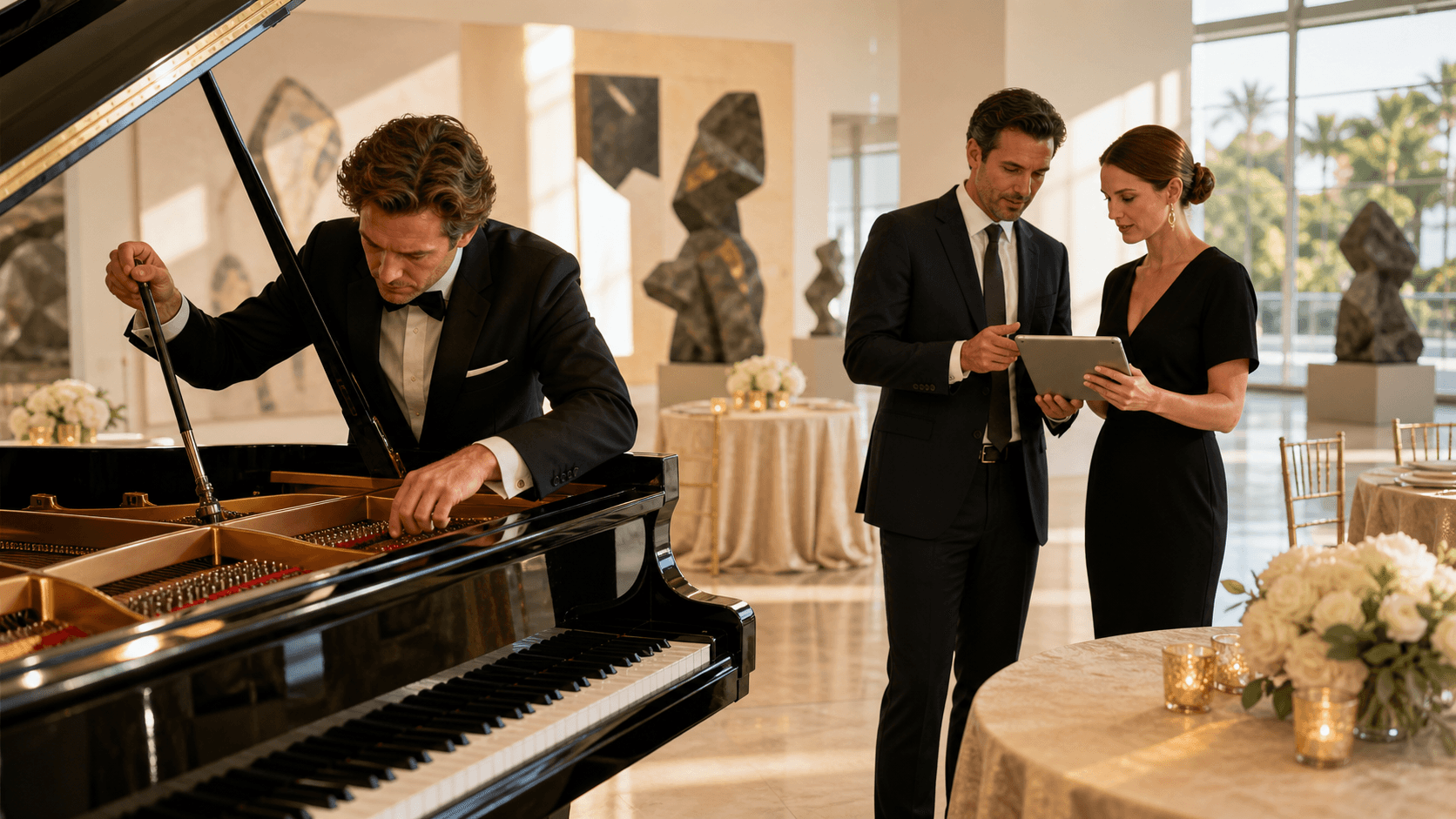
Museum logistics in Los Angeles can be very specific, especially with security, artwork protection, and tight event schedules. It helps to loop in your pianist early so they can coordinate with staff.
Key details to confirm with the venue and your musician:
- Load-in and load-out times and any security check procedures.
- Power access for keyboards, microphones, and small sound systems.
- Exact placement of the piano in relation to exhibits, food stations, and seating.
Acoustics are another big piece. Grand museum spaces often have high ceilings, stone floors, and open galleries. A professional pianist will:
- Plan for sound checks before guests arrive.
- Adjust volume so the music carries but does not echo harshly.
- Work with simple, tasteful amplification if needed.
Since late summer flows right into gala season in LA, planners often start locking in music early. Many donors have full calendars with multiple events each week. It helps to:
- Book key talent once your date and venue are confirmed.
- Decide early if parts of the event will be outside or in courtyards.
- Have light contingency plans for outdoor or semi-outdoor spaces, like shade or alternate placement for instruments.
What a Luxury-Level Performance Package Includes
When you bring in a high-end pianist for a museum gala, you are booking much more than a playlist.
A typical luxury-style performance often includes:
- A curated setlist that fits your theme, guest profile, and schedule.
- Seamless transitions between cocktail hour, dinner, and donor moments.
- The option for vocals on key songs or segments if that suits your vision.
- Coordination with planners and AV teams so music supports each part of the program.
Package details usually cover:
- Total performance time and built-in short breaks.
- A process for special song requests or feature moments.
- Time for arrival, setup, and sound check before doors open.
- Attire that matches the formality of your museum event.
At Piano By Steven, we focus on how the music feels for your guests from the first note to the last, especially in the museum and corporate event spaces we know so well in Los Angeles and Southern California. The goal is not just to fill silence, but to make your gala feel cohesive, warm, and memorable, without ever pulling focus from the art or your mission.
Elevate Your Museum Gala With Live Piano That Complements Every Exhibit
Make your next museum gala unforgettable with live piano that enhances the art, the ambiance, and your guests' experience. At Piano By Steven, we collaborate closely with event planners and curators to tailor a repertoire that fits your theme, venue acoustics, and schedule. If you are looking for a seasoned pianist for a museum gala, we provide polished, professional performances from guest arrival through the final toast. Reach out today so we can discuss your vision and craft a musical program that fits your event perfectly.